Waterproofing your basement is vital for preventing costly damage and maintaining a dry, usable space. Start by evaluating your basement for moisture issues, such as mold or water stains. Once you identify the problem areas, choosing the right materials becomes essential. With the right preparation and techniques, you can effectively waterproof your basement and protect your home from water intrusion. Let’s explore the steps to guarantee your basement stays dry and secure.
Key Takeaways
- Inspect your basement for visible moisture issues like mold, water stains, and cracks before starting the waterproofing process.
- Choose high-quality sealants, like acrylic for interior walls and epoxy for sealing cracks, to effectively combat moisture.
- Prepare the space by clearing clutter, cleaning surfaces, and repairing any existing cracks to ensure proper adhesion of sealants.
- Apply sealants evenly with a brush or roller, paying special attention to corners and joints where leaks often occur.
- Schedule regular inspections and maintain proper humidity levels to ensure the longevity of your waterproofing efforts.
Assessing Your Basement for Moisture Issues
Before you plunge into waterproofing your basement, it’s essential to assess it for moisture issues.
Start with a thorough basement inspection. Look for visible signs of dampness, such as mold, water stains, or peeling paint. Check around windows and doors for leaks and inspect the foundation for cracks.
Identify potential moisture sources like plumbing leaks, poor drainage, or high humidity. Use a moisture meter to measure the humidity levels; anything above 60% could signal a problem.
Choosing the Right Waterproofing Materials
When it comes to waterproofing your basement, selecting the right materials is essential for long-lasting protection.
You’ll need to take into account both sealants and coatings to create a barrier against moisture, as well as drainage solutions to manage water flow effectively.
Understanding your options will help you make informed choices that suit your specific needs.
Sealants and Coatings
Choosing the right sealants and coatings for your basement can greatly impact its waterproofing effectiveness. Understanding the various sealant types and their coating applications is essential for a successful project.
| Sealant Type | Coating Application |
|---|---|
| Acrylic | Interior walls |
| Polyurethane | Exterior surfaces |
| Epoxy | Cracks and joints |
Select an acrylic sealant for flexibility, while polyurethane offers excellent durability. For severe moisture issues, epoxy coatings can create a robust barrier. Always make sure surfaces are clean and dry before applying your chosen sealant or coating for best results.
Drainage Solutions Options
Effective drainage solutions are vital for preventing water accumulation in your basement and guaranteeing long-term protection.
Start by evaluating different drainage types, such as interior French drains, sump pumps, and exterior drainage systems. Each option has unique benefits, so choose what best fits your home’s needs.
Remember, proper drainage maintenance is essential; regularly check for clogs, clean filters, and make sure all components function effectively.
Investing time in these solutions will save you from costly repairs down the line. By selecting the right materials and maintaining your drainage system, you’ll keep your basement dry and secure for years to come.
Preparing the Space for Waterproofing
Preparing the space for waterproofing is essential to confirm a successful outcome and protect your basement from water damage. Start by confirming proper space clearance; remove all furniture, boxes, and clutter. Next, focus on surface preparation by cleaning the walls and floors thoroughly. This helps the sealants adhere effectively.
| Task | Purpose |
|---|---|
| Clear the space | Prevents obstruction |
| Clean surfaces | Enhances adhesion |
| Repair cracks | Prevents water intrusion |
| Inspect for mold | Guarantees a healthy environment |
| Allow drying time | Prepares for sealant application |
Taking these steps will set you up for success.
Applying Interior Sealants and Coatings
With a clean and dry basement, you’re ready to tackle the application of interior sealants and coatings.
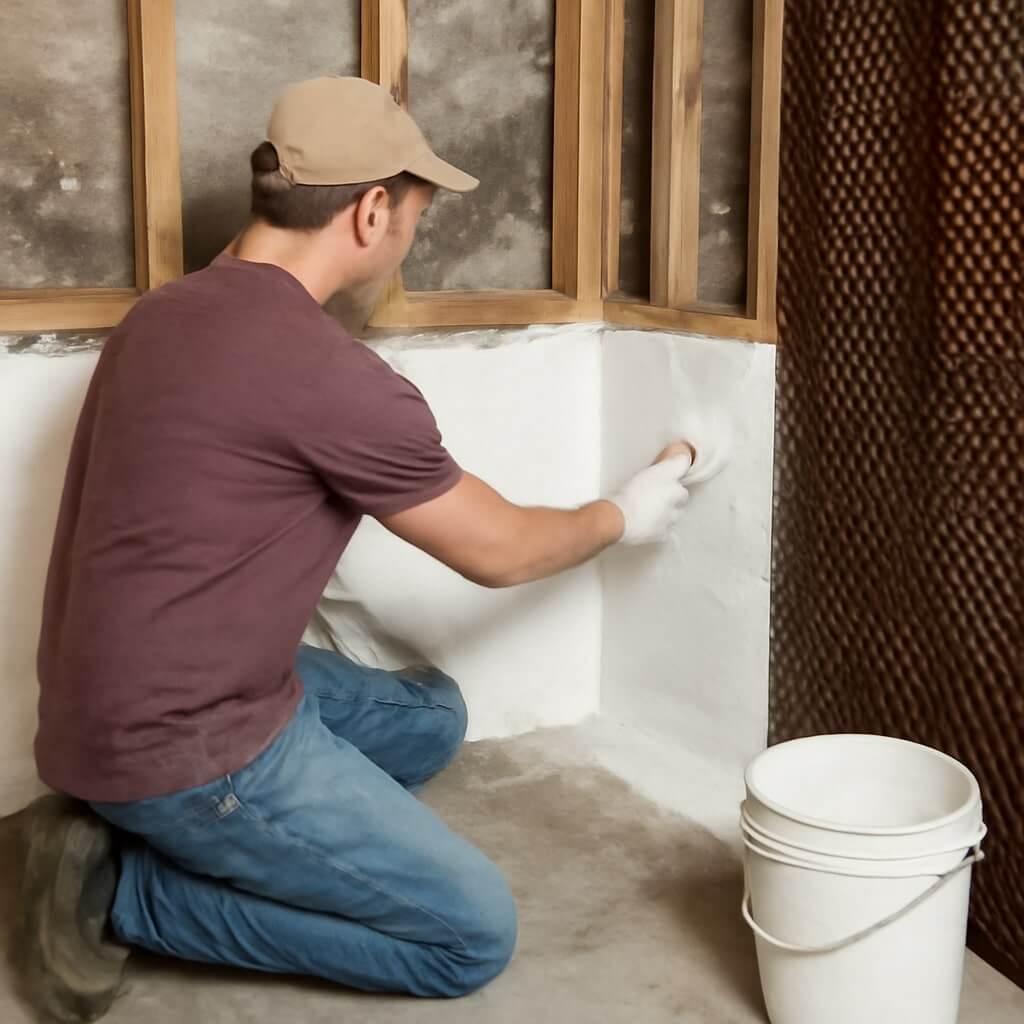
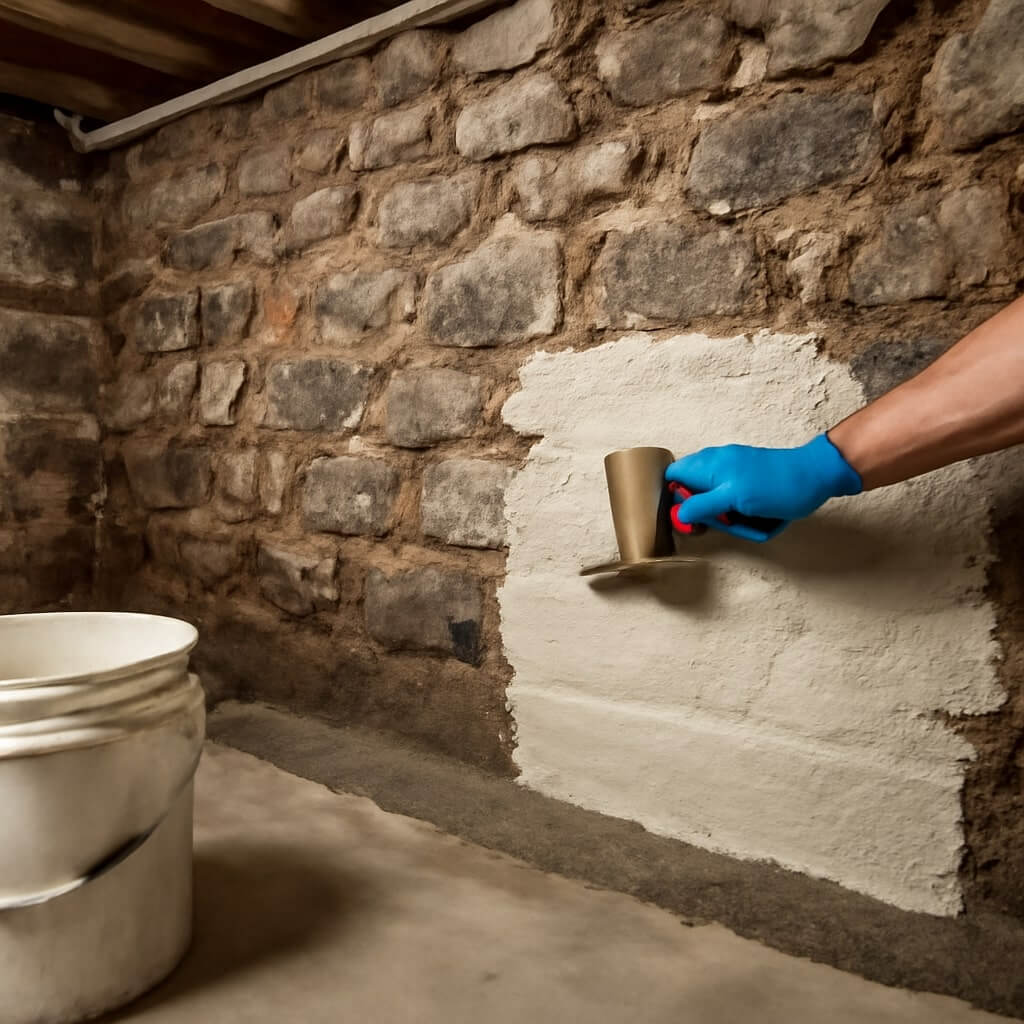
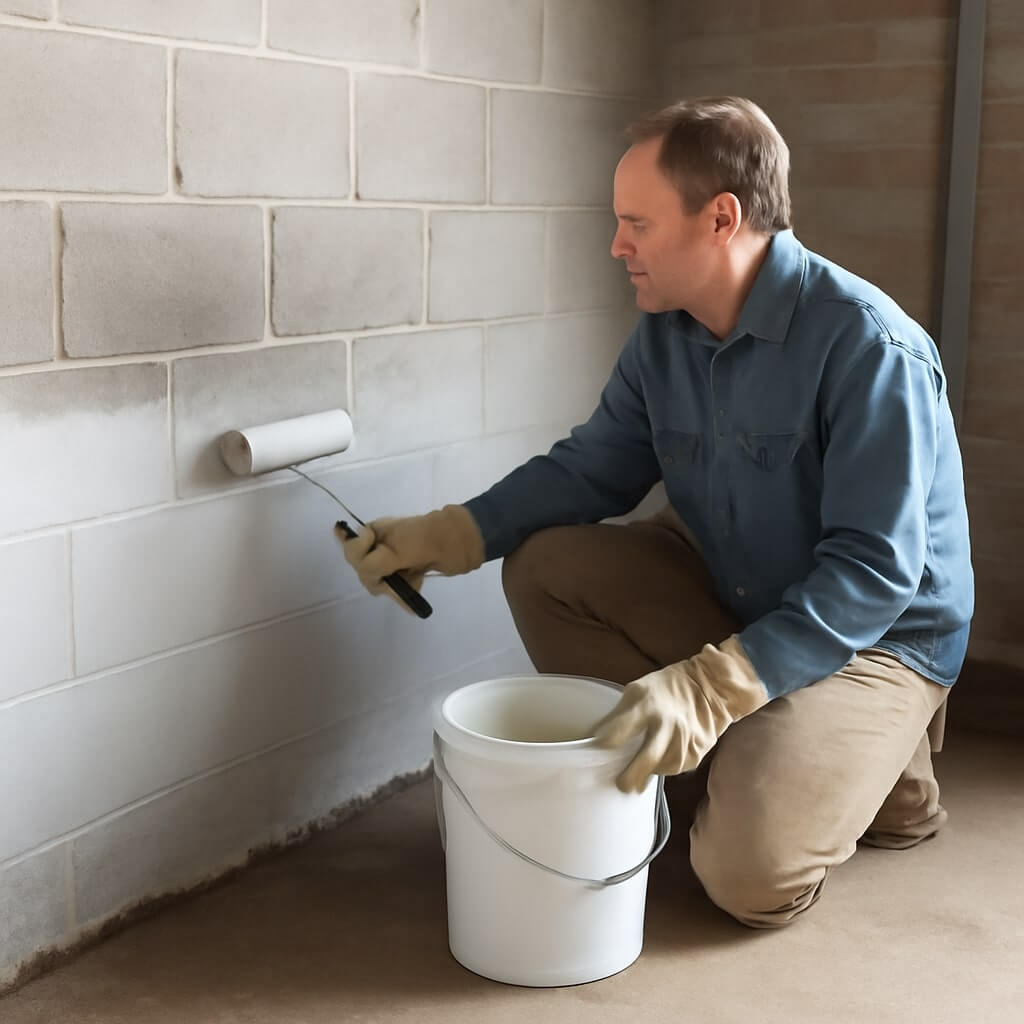
Start by choosing high-quality interior sealants designed for waterproofing. Apply the sealant using a brush or roller, ensuring even coverage on walls and floors. Don’t forget to pay attention to corners and joints, as these are common leak points.
For added protection, consider applying waterproof coatings over the sealant once it’s dry. This creates a robust barrier against moisture.
Always follow the manufacturer’s instructions for best results, and allow adequate drying time before resuming normal basement activities.
Happy waterproofing!
Installing a Sump Pump and Drainage System
If you want to keep your basement dry and free from flooding, installing a sump pump and drainage system is essential.
Start by planning your drainage system design; identify low points where water accumulates. Next, dig a hole for the sump pump, ensuring it’s below the floor level. Connect the drainage pipes to funnel water into the sump pit.
For sump pump installation, follow the manufacturer’s instructions, ensuring the pump is submersible and has a backup power source. Finally, test the system to confirm it effectively removes water.
A well-designed drainage system protects your basement from future moisture issues.
Maintaining Your Waterproofed Basement
To keep your basement waterproofed, regular inspections and maintenance are essential.
You’ll want to guarantee your drainage systems are functioning properly and address any humidity issues promptly.
Regular Inspections and Maintenance
Regular inspections and maintenance play an essential role in preserving the integrity of your waterproofed basement.
Schedule seasonal inspections to check for any cracks, leaks, or signs of water intrusion. Look for peeling paint or damp spots on walls, as these can indicate moisture issues.
Implement moisture monitoring by using a hygrometer to keep an eye on humidity levels. If they rise too high, consider using a dehumidifier.
By staying proactive and addressing problems early, you can guarantee your basement remains dry and protected, ultimately saving you time and money in the long run.
Regular upkeep is key!
Proper Drainage Systems
After guaranteeing your basement is regularly inspected and maintained, the next step is to focus on proper drainage systems.
A well-thought-out drainage design prevents water accumulation and protects your waterproofing efforts. Start by installing sump pumps and French drains to redirect water away from your foundation.
Regular drainage maintenance is essential; clean gutters, downspouts, and drains to verify they function effectively. Check for blockages and confirm the slope around your home directs water away.
Humidity Control Solutions
While waterproofing your basement is essential, managing humidity levels is equally important to guarantee your space remains dry and comfortable.
Invest in humidity control solutions like dehumidifiers to maintain ideal moisture levels. This equipment can efficiently reduce excess moisture, protecting your belongings and preventing mold growth.
Additionally, confirm your moisture barriers are intact and properly installed, as they play a critical role in minimizing humidity. Regularly check for any signs of wear or damage to these barriers and replace them as needed.
Conclusion
By following these steps, you can effectively waterproof your basement and protect it from moisture damage. Regularly inspecting your space and maintaining the sealants will guarantee long-lasting protection. Don’t forget to keep your basement tidy and check your drainage system periodically. With a little effort and the right materials, you’ll create a dry, safe environment that enhances your home’s value and comfort. Take action now, and enjoy peace of mind in your waterproofed basement!