
If you’re facing persistent moisture issues in your basement, these 10 case studies provide a detailed look at effective waterproofing techniques. You’ll find practical solutions like advanced sump pump systems, innovative drainage methods, and the strategic use of vapor barriers. Each example highlights real-world results that transform damp spaces into safe, livable areas. Discover the specific strategies that worked and how they might be applicable to your situation.
Key Takeaways
- Case studies showcase effective exterior waterproofing techniques, including high-quality barriers and proper drainage systems to prevent water penetration.
- Successful implementations of French drains illustrate how redirecting water enhances drainage and reduces flooding risks in basements.
- Moisture control strategies, such as vapor barriers and sump pumps, demonstrate significant improvements in indoor air quality and humidity levels.
- Assessing and repairing wall cracks using epoxy or polyurethane sealants has proven vital in preventing moisture intrusion in vulnerable areas.
- Landscaping adjustments, including grading and swales, have been effective in managing water flow and preventing basement water issues in residential properties.
Case Study 1: Innovative Drainage Solutions for Persistent Leaks
When dealing with persistent leaks in basements, you need a reliable solution that addresses the root of the problem.
Innovative drainage solutions are essential for tackling drainage challenges effectively. Begin by evaluating your landscape’s slope; guarantee it directs water away from your foundation.
Install perimeter drains and a sump pump to manage excess water. These systems enhance leak prevention by capturing groundwater before it enters your basement.
Utilize gravel backfill to promote efficient drainage and reduce hydrostatic pressure.
Regular maintenance and inspections will further secure your basement, providing long-term protection against leaks and enhancing the overall integrity of your home.
Case Study 2: Transforming a Flood-Prone Basement With Exterior Waterproofing
If your basement is prone to flooding, implementing exterior waterproofing can be a game changer. This approach effectively mitigates flood damage by addressing water entry at its source.
Here’s how to transform your flood-prone basement with proven exterior solutions:
- Excavate around the foundation to expose the walls.
- Install a waterproof barrier made of high-quality materials to prevent water penetration.
- Add a drainage system to direct water away from the foundation.
- Backfill with gravel to enhance drainage and reduce soil saturation.
These steps create a robust defense, ensuring your basement remains dry and functional year-round.
Case Study 3: Successful Installation of Interior Waterproofing Systems
In this case study, you’ll explore key installation techniques for interior waterproofing systems that guarantee effective moisture control.
You’ll see how these methods not only address immediate water issues but also contribute to long-term performance benefits for your basement.
Understanding these solutions can help you make informed decisions for a dry and safe environment.
Key Installation Techniques
Although many homeowners underestimate the importance of proper installation techniques, mastering key methods for interior waterproofing systems can greatly reduce the risk of water intrusion.
Here are four essential installation techniques:
- Select Quality Waterproofing Materials: Use high-grade membranes and sealants to guarantee durability.
- Implement Effective Drainage Techniques: Design a proper drainage system to divert water away from the foundation.
- Ascertain Proper Surface Preparation: Clean and repair walls before installation to enhance adhesion.
- Install Sump Pumps: Place efficient sump pumps to manage excess water and prevent buildup.
Long-term Performance Benefits
Proper installation techniques not only guarantee immediate effectiveness but also contribute considerably to the long-term performance of interior waterproofing systems.
By ensuring precise sealing and proper drainage, you enhance the long-term durability of your basement. This durability prevents structural damage and costly repairs down the line.
Additionally, effective moisture resistance keeps mold and mildew at bay, safeguarding your indoor air quality.
Regular maintenance, combined with high-quality materials, further enhances these systems, promoting longevity.
When you invest in proper installation and ongoing care, you’re not just solving immediate issues; you’re securing a dry, safe environment for years to come.
Case Study 4: Utilizing Vapor Barriers to Combat Humidity
Vapor barriers play an essential role in controlling humidity levels in your basement.
By understanding the key installation techniques, you can effectively reduce moisture intrusion and prevent damage.
This approach not only protects your space but also guarantees long-term humidity control.
Importance of Vapor Barriers
When you’re dealing with humidity in your basement, understanding the role of vapor barriers is essential for effective waterproofing.
These barriers are vital for moisture control, preventing dampness that can lead to mold and structural damage.
Here’s why you should consider vapor barrier materials:
- Prevents Moisture Transfer: Stops water vapor from seeping into your basement.
- Reduces Mold Growth: Deters the conditions that foster mold proliferation.
- Improves Air Quality: Minimizes allergens and irritants in your living space.
- Enhances Energy Efficiency: Keeps your basement climate-controlled, lowering energy costs.
Implementing vapor barriers is a smart investment for any homeowner.
Installation Techniques Explained
Effective installation of vapor barriers can considerably enhance moisture control in your basement. Start by selecting high-quality installation materials, such as polyethylene sheeting, ensuring a thickness of at least six mils for durability.
Clean the surface thoroughly to achieve ideal adhesion. You’ll want to use waterproofing methods like sealing seams with tape or adhesive to prevent moisture infiltration.
Install the barrier directly against the foundation walls and floor, extending it up to the sill plate. This creates an effective shield against humidity.
Pay close attention to any penetrations, ensuring they’re properly sealed to maintain the integrity of your moisture barrier system.
Long-Term Humidity Control
Combatting humidity in your basement is essential for maintaining a healthy environment and protecting your home.
Utilizing vapor barriers is a proven technique for effective moisture control. Here’s how you can implement it:
- Install humidity sensors to monitor moisture levels continuously.
- Seal cracks and gaps in walls and floors to prevent moisture ingress.
- Apply vapor barriers on walls and floors to block humidity from the soil.
- Ensure proper ventilation to allow air circulation and reduce humidity buildup.
These steps will help you maintain a dry basement, ensuring long-term protection against moisture-related issues.
Case Study 5: Advanced Sump Pump Systems for Heavy Rainfall
As heavy rainfall events become more frequent, homeowners need reliable solutions to prevent basement flooding.
Advanced sump pump systems can effectively manage the rainfall impact, ensuring your basement stays dry. These systems often include dual pumps for redundancy and backup power options to maintain function during power outages.
Advanced sump pump systems provide reliable protection against heavy rainfall, featuring dual pumps and backup power to keep your basement dry.
Regular sump pump maintenance is essential; check the pump’s operation, clean the sump pit, and inspect discharge lines to prevent clogs.
Implementing these techniques not only safeguards your home but also enhances its value.
With the right sump pump system, you can confidently tackle any heavy rainfall without the fear of water intrusion.
Case Study 6: Hydrostatic Pressure Relief Techniques
Heavy rainfall can lead to an increase in hydrostatic pressure around your home’s foundation, posing a significant risk of basement leaks and flooding.
To effectively manage this pressure and improve basement drainage, consider the following techniques:
- Exterior Drainage Systems: Install French drains to redirect water away from the foundation.
- Interior Drainage Systems: Utilize sump pumps alongside perimeter drains to manage water accumulation.
- Grading Adjustments: Guarantee your yard slopes away from the foundation to minimize water pooling.
- Wall Moisture Barriers: Apply membranes to block moisture penetration, reducing hydrostatic pressure effects.
These strategies can safeguard your basement from water damage.
Case Study 7: Sealant Application for Cracked Walls
To effectively address cracked walls, you need to start with a thorough wall crack assessment to identify the extent and cause of the damage.
Once you’ve gathered that information, you can proceed with the sealant application process to guarantee a watertight seal.
This method not only prevents water intrusion but also reinforces the structural integrity of your basement walls.
Wall Crack Assessment
Cracked walls in basements can lead to significant moisture issues if not addressed promptly.
To assess these cracks effectively, you should consider:
- Crack Types: Identify whether they’re vertical, horizontal, or stair-step.
- Severity: Evaluate the width and depth to determine urgency.
- Moisture Presence: Check for signs of water infiltration around the cracks.
- Repair Methods: Decide on appropriate solutions like epoxy injection or polyurethane sealants.
Sealant Application Process
Addressing wall cracks effectively requires a systematic sealant application process to prevent water infiltration and further structural damage.
Start by identifying the appropriate sealant types, such as polyurethane or epoxy, based on the crack’s size and location.
Clean the crack thoroughly, removing dust and debris to guarantee proper adhesion.
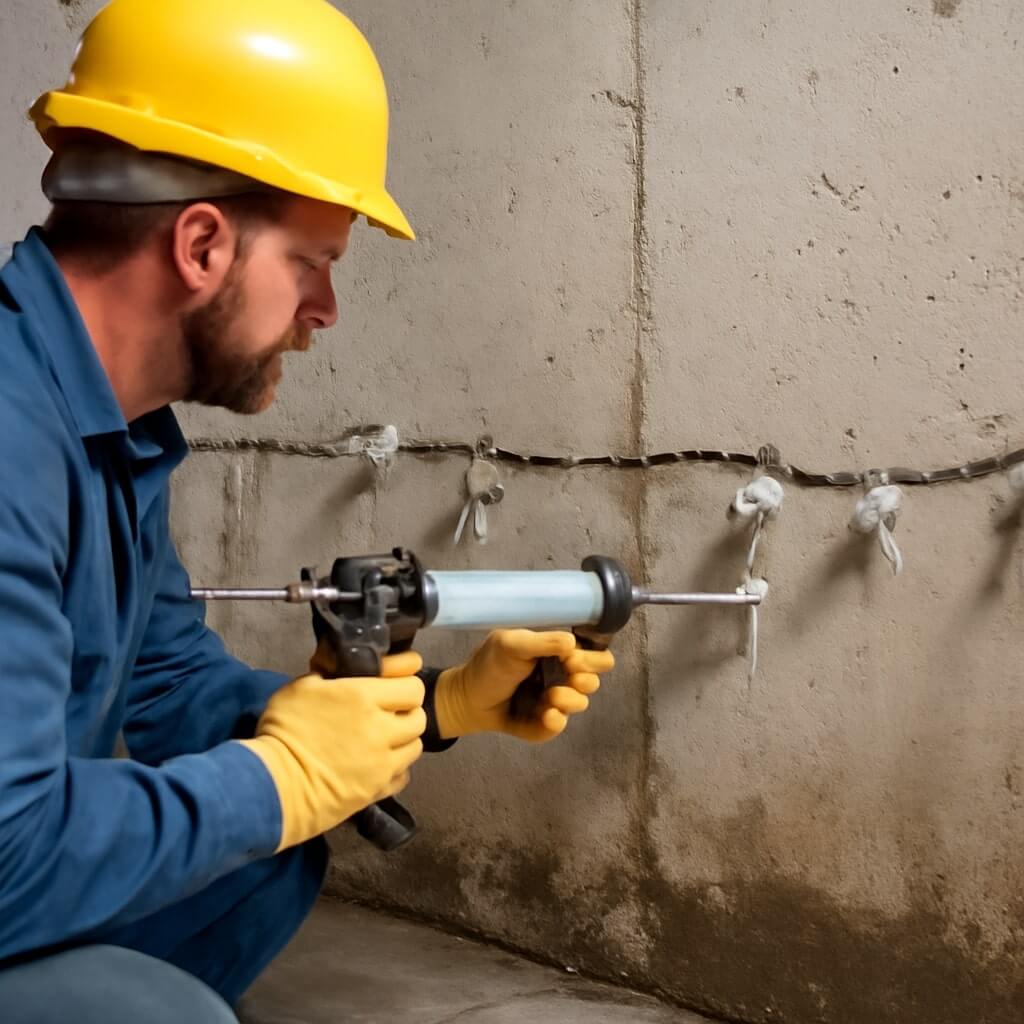
Apply the chosen sealant using a caulking gun or trowel, following manufacturer guidelines for thickness and curing times.
For deeper cracks, consider injecting the sealant for better penetration.
After application, monitor the area for any signs of moisture, guaranteeing the sealant performs as intended and maintains the integrity of your basement.
Case Study 8: Grading and Landscaping Adjustments to Redirect Water
When heavy rains cause water to pool around your home, grading and landscaping adjustments can effectively redirect runoff and protect your basement from flooding.
Here are some proven grading techniques and landscaping solutions to take into account:
- Slope the Landscape: Make certain the ground slopes away from your foundation.
- Install Retaining Walls: Use walls to manage water flow and prevent erosion.
- Create Swales: Design shallow channels to direct water away from your home.
- Choose Permeable Materials: Use permeable pavers or gravel to enhance drainage.
Implementing these strategies can make a significant difference in preventing basement water issues.
Case Study 9: Implementing French Drains in Urban Basements
In urban environments where heavy rainfall can lead to significant water accumulation, implementing French drains becomes crucial for protecting basements from flooding.
These systems efficiently redirect water away from your foundation, addressing common basement challenges. By creating a trench filled with gravel and a perforated pipe, you enhance urban drainage, allowing groundwater to flow towards the drain instead of pooling around your basement walls.
French drains effectively channel water away from foundations, preventing basement flooding by directing groundwater towards drainage systems.
Regular maintenance guarantees the system remains clear of debris, maximizing its effectiveness.
In this case study, homeowners reported a noticeable decrease in water intrusion, showcasing how French drains can be a reliable solution for urban basements.
Case Study 10: Retrofitting Basements With Modern Waterproofing Technologies
Urban environments often require innovative solutions to combat water intrusion, and retrofitting basements with modern waterproofing technologies provides a thorough approach.
You can enhance your basement’s resilience through:
- Interior Drainage Systems: Redirect water away from walls.
- Vapor Barriers: Prevent moisture permeation through walls and floors.
- Sump Pumps: Actively remove accumulated water before it floods.
- Advanced Sealants: Create a waterproof barrier around potential leak points.
These modern innovations in basement technologies not only protect your property but also improve indoor air quality, ensuring a dry, safe living space for years to come.
Conclusion
To summarize, these 10 case studies illustrate the effectiveness of various basement waterproofing techniques tailored to specific challenges. By implementing solutions like advanced sump pump systems, vapor barriers, and strategic grading adjustments, homeowners can achieve lasting protection against water intrusion. Each approach not only addresses immediate concerns but also enhances the overall integrity of your living space. With the right strategies in place, you can transform your basement into a dry and healthy environment for years to come.