When it comes to basement waterproofing in Hutchinson, understanding your specific moisture issues and local weather patterns is essential. You’ll need to weigh the pros and cons of interior versus exterior solutions, while also considering effective drainage systems. Choosing the right method can not only protect your home but also enhance its value. Let’s explore how to navigate these options and find the best solution tailored to your needs.
Key Takeaways
- Assess your basement’s specific water issues to determine the most effective waterproofing method, such as interior or exterior solutions.
- Consider the long-term benefits of waterproofing, including increased property value and reduced maintenance costs.
- Evaluate the installation costs of various methods, as interior solutions tend to be more affordable than exterior ones.
- Ensure proper drainage systems, like French drains and sump pumps, are installed to prevent water accumulation around the foundation.
- Regularly maintain your chosen waterproofing system to enhance its effectiveness and longevity, keeping your basement dry and safe.
Understanding Basement Water Damage Risks in Hutchinson
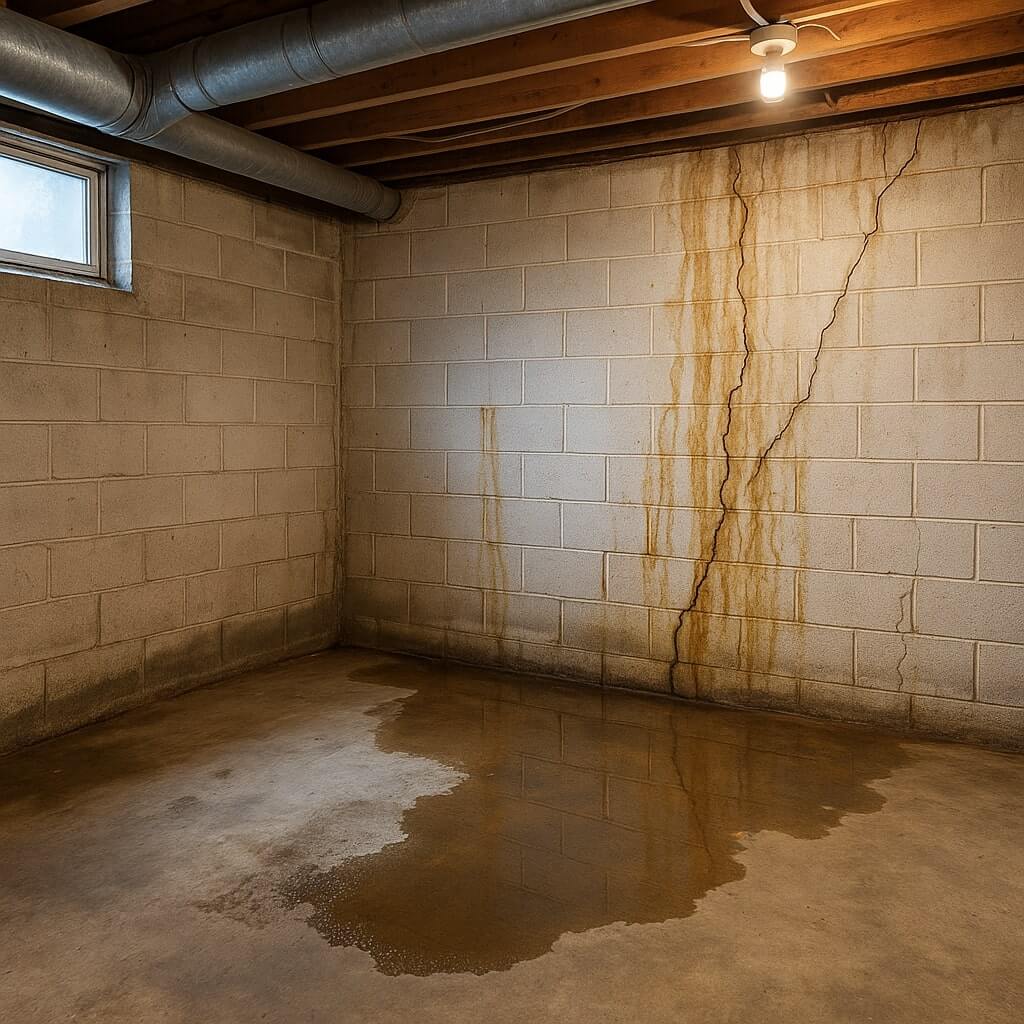
Understanding the risks of basement water damage in Hutchinson is vital for any homeowner. Water intrusion can lead to structural damage, mold growth, and costly repairs.
Effective flood prevention and moisture control strategies are important in minimizing these risks. Factors such as heavy rainfall, poor drainage, and soil erosion can exacerbate water issues in your basement.
Implementing flood prevention and moisture control is crucial to mitigate basement water damage risks.
Recognizing these threats allows you to implement proactive measures, including proper grading and sump pump installation. By addressing these concerns early, you not only protect your property but also enhance its value and guarantee a safe living environment for your family.
Don’t wait until it’s too late!
Common Basement Waterproofing Methods
When it comes to protecting your basement from water damage, implementing the right waterproofing methods is crucial to maintaining a dry and safe environment.
You should consider various basement sealing techniques, such as epoxy injections or polyurethane foams, to effectively seal cracks and prevent leaks.
Additionally, moisture barrier options like polyethylene sheets or liquid-applied membranes create a protective layer against water infiltration.
These methods not only enhance your basement’s durability but also improve air quality and prevent mold growth.
Interior vs. Exterior Waterproofing Solutions
When it comes to waterproofing your basement, understanding the key differences between interior and exterior solutions is essential.
Each method has its own installation process and long-term effectiveness that can greatly impact your home’s safety and value.
Let’s explore these factors to help you make an informed decision.
Key Differences Explained
Choosing the right waterproofing solution for your basement can greatly impact its longevity and your home’s overall health. Understanding the key differences between interior and exterior waterproofing is essential.
| Feature | Interior Waterproofing | Exterior Waterproofing |
|---|---|---|
| Waterproofing Materials | Sealants, membranes | Drainage systems, coatings |
| Environmental Considerations | Less invasive, indoor air quality | More excavation, site impact |
| Cost | Generally lower | Typically higher |
Interior options often focus on managing moisture, while exterior solutions protect against water intrusion before it reaches your home. Choose wisely for lasting protection!
Installation Process Comparison
Three main steps define the installation process for both interior and exterior waterproofing solutions, each tailored to address specific moisture issues.
For interior waterproofing, you’ll start with wall preparation, followed by the installation of drainage systems, and finally, sealing the walls.
Exterior waterproofing involves excavating around your foundation, applying a waterproof membrane, and ensuring proper drainage.
Each method presents unique installation challenges, such as access limitations for interior solutions or the need for heavy equipment for exterior work.
Carefully considering your equipment options is essential for a successful installation, ensuring you effectively tackle moisture issues in your basement.
Long-term Effectiveness Analysis
While both interior and exterior waterproofing solutions aim to keep your basement dry, their long-term effectiveness can differ considerably based on various factors.
Exterior systems often provide greater long-term durability as they address water infiltration at the source, reducing pressure against your foundation. However, they require ongoing maintenance, such as ensuring proper drainage and checking for blockages.
In contrast, interior solutions may be easier to install but can lead to recurring issues if not maintained properly.
Ultimately, choosing the right approach depends on your specific needs, budget, and willingness to invest in ongoing upkeep for ideal basement protection.
The Importance of Proper Drainage Systems
When it comes to protecting your basement, understanding the types of drainage systems available is essential.
Effective installation techniques can greatly enhance their performance, while regular maintenance guarantees they last.
Types of Drainage Systems
Proper drainage systems are vital for preventing water accumulation in your basement, as even minor leaks can lead to considerable damage over time.
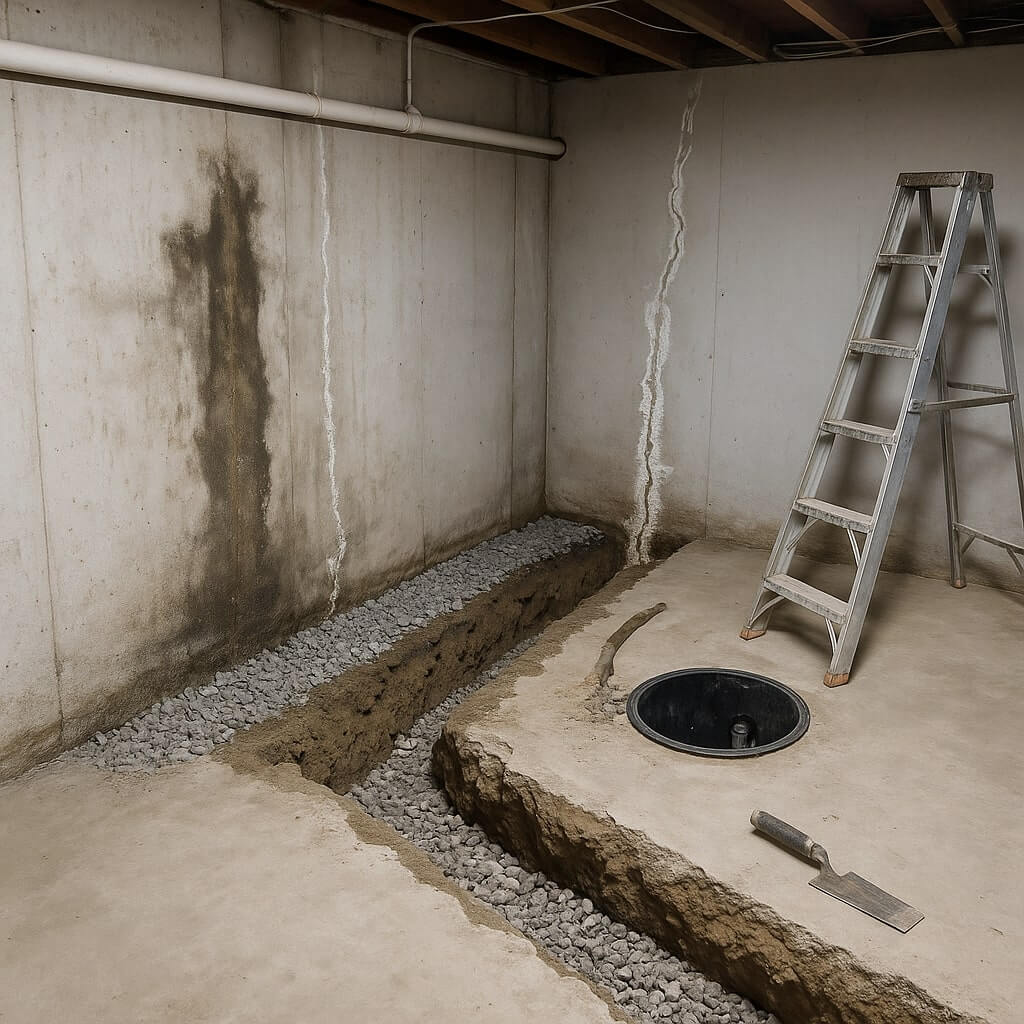
To effectively manage water, consider installing French drains, which redirect surface water away from your foundation. Additionally, sump pumps play an important role in removing excess water that may collect in your basement.
Key Installation Techniques
Installing an effective drainage system requires attention to detail and adherence to specific techniques to guarantee long-lasting performance.
First, choose high-quality installation materials that can withstand moisture and pressure. Utilize waterproofing techniques like proper sloping and placement of drainage tiles to redirect water away from your foundation.
Make certain that downspouts extend at least 6 feet from the home to minimize pooling. Installing a sump pump can also enhance water management.
By following these key installation techniques, you’re not just protecting your basement but also investing in your property’s future.
Don’t cut corners—proper installation is essential for effective drainage and waterproofing.
Maintenance for Longevity
Although you may have invested in an excellent drainage system, ongoing maintenance is essential to guarantee its effectiveness and longevity.
Implementing preventive maintenance through regular inspections can help identify potential issues before they escalate. Check for clogs in drain lines, verify sump pumps are operational, and examine the grading around your foundation.
It’s vital to address any signs of wear or damage promptly. By prioritizing these routine checks, you’ll not only prolong the life of your drainage system but also protect your basement from water damage.
Don’t wait until problems arise; stay proactive for a dry, healthy space.
Evaluating Cost vs. Long-Term Benefits
When evaluating basement waterproofing solutions, it’s essential to weigh the initial costs against the long-term benefits you’ll gain.
Weighing initial costs against long-term benefits is crucial when considering basement waterproofing solutions.
A thorough cost analysis and benefit assessment can help you make an informed decision.
Here are some factors to take into account:
- Increased property value
- Reduced repair and maintenance expenses
- Enhanced indoor air quality
- Prevention of mold and mildew growth
Choosing a Professional Waterproofing Contractor
Selecting the right waterproofing contractor can greatly impact the effectiveness of your basement waterproofing solution and the overall value of your investment.
To guarantee success, prioritize contractor qualifications by checking their licenses, insurance, and experience in the field. Don’t hesitate to ask for customer testimonials; these provide valuable insights into their reliability and workmanship.
A reputable contractor should be willing to share references and previous project examples. By thoroughly vetting potential contractors, you’ll make an informed decision that safeguards your home and enhances its value.
Ultimately, the right professional can turn your waterproofing project into a success story.
Conclusion
In summary, selecting the right basement waterproofing solution in Hutchinson is essential for protecting your home from moisture damage. By understanding the risks, evaluating both interior and exterior methods, and considering proper drainage systems, you can make an informed decision. Weighing the costs against long-term benefits is key, and consulting with a professional contractor guarantees you get a tailored solution that enhances your property’s value. Don’t wait—act now to safeguard your basement and home investment.