Basement waterproofing is essential for protecting your home in Yonkers, but many homeowners make simple mistakes that can lead to bigger problems. From neglecting drainage systems to overlooking cracks, these missteps can result in costly damage. Are you aware of the common pitfalls that could compromise your basement? Understanding these issues can make a significant difference in maintaining a dry and healthy space. Let’s explore what you need to avoid.
Key Takeaways
- Neglecting proper drainage systems can lead to flooding and mold growth; ensure gutters and downspouts direct water away from your foundation.
- Overlooking cracks and gaps invites water intrusion; assess and seal any vulnerabilities promptly to prevent moisture issues.
- Using inadequate waterproofing materials increases the risk of leaks; invest in high-quality sealants and hire professionals for installation.
- Failing to maintain gutters and downspouts can cause water pooling; keep them clear of debris and ensure proper installation for effective drainage.
- Ignoring ventilation allows moisture buildup; ensure adequate airflow with vents or dehumidifiers to combat mold growth and improve air quality.
Neglecting Proper Drainage Systems
When you neglect proper drainage systems, you’re setting yourself up for serious basement problems. A well-thought-out drainage design is vital for preventing water buildup. Without it, you risk flooding, mold growth, and structural damage.
Installing a sump pump can effectively manage excess water, but it requires a solid drainage plan to function correctly. Make sure your gutters and downspouts direct water away from your foundation, and consider adding French drains if necessary.
Regular maintenance of these systems is essential to keep your basement dry and safe. Don’t let poor drainage lead to costly repairs—invest in a reliable drainage solution today.
Overlooking Cracks and Gaps
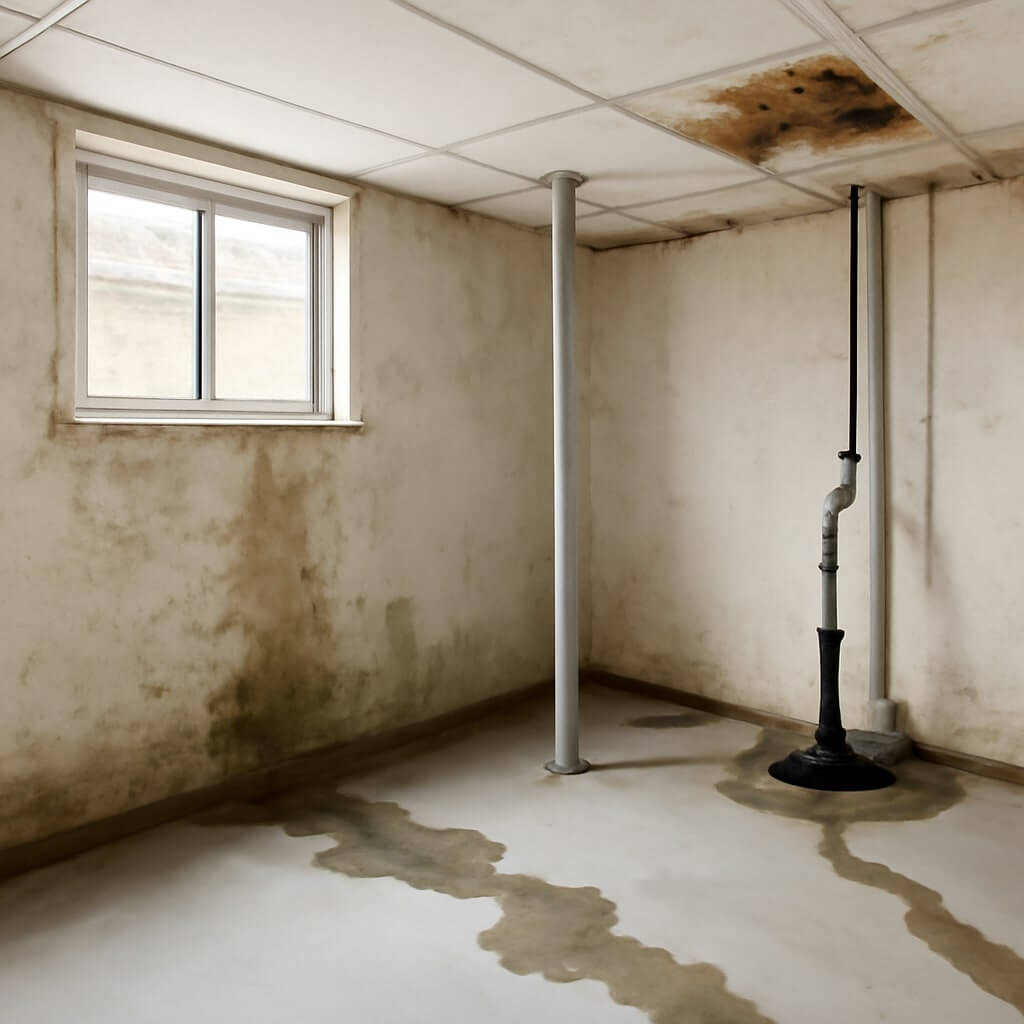
Ignoring cracks and gaps in your basement can lead to significant water intrusion and damage. You should conduct a thorough crack assessment to identify any vulnerabilities in your foundation.
Neglecting basement cracks can result in serious water damage; a thorough assessment is crucial for foundation protection.
Even small cracks can allow moisture to seep in, causing mold and structural issues over time. Once you’ve pinpointed the problem areas, prioritize gap sealing to protect your basement from water leaks.
Use high-quality sealants designed for basement conditions to guarantee long-lasting results. Regularly inspect your basement for new cracks and gaps, as early detection can save you costly repairs down the line.
Don’t underestimate the importance of this essential maintenance step.
Using Inadequate Waterproofing Materials
Choosing the right waterproofing materials is essential for protecting your basement from moisture damage. Using inadequate sealants or opting for low-quality products can lead to costly repairs. Guarantee proper installation to maximize their effectiveness.
| Common Mistakes | Consequences | Solutions |
|---|---|---|
| Inadequate sealants | Water leaks | Use high-quality sealants |
| Improper installation | Structural damage | Hire a professional |
| Wrong materials | Mold growth | Research best options |
Failing to Maintain Gutters and Downspouts
Maintaining gutters and downspouts is essential for preventing basement water issues. Clogged or damaged gutters can lead to overflow, directing water toward your foundation.
Regular gutter maintenance guarantees they’re clear of debris, allowing for proper drainage. If you haven’t installed downspouts properly, water may pool around your home, increasing the risk of leaks in your basement.
Regularly maintaining gutters ensures proper drainage and prevents water pooling around your home, reducing basement leak risks.
Make sure downspout installation directs water at least six feet away from your foundation. Neglecting these simple tasks can lead to costly repairs and mold growth.
Stay proactive with your gutter and downspout upkeep to safeguard your basement from water damage.
Ignoring the Importance of Ventilation
While it might be easy to overlook, proper ventilation is vital for keeping your basement dry and free from mold.
Poor air circulation leads to moisture buildup, creating an environment ripe for mold growth and structural damage. To combat this, verify your basement has adequate airflow by installing vents or using dehumidifiers.
Regularly check for blockages in vents and windows, as these can severely limit airflow. Remember, a well-ventilated basement not only prevents moisture issues but also improves overall air quality in your home.
Don’t underestimate the importance of ventilation—it’s a significant step in effective basement waterproofing.
Conclusion
To protect your Yonkers basement from moisture-related issues, it’s essential to avoid these common waterproofing mistakes. Focus on implementing a reliable drainage system, sealing cracks and gaps, and using high-quality materials. Don’t forget to regularly maintain your gutters and downspouts, and guarantee proper ventilation. By addressing these key areas, you can safeguard your home from flooding, mold, and structural damage, keeping your basement dry and safe for years to come.