
When it comes to basement waterproofing, several factors can greatly impact your expenses. The size of your basement, the chosen waterproofing method, and the severity of existing water issues all play vital roles in determining costs. Plus, local labor rates and material quality can add up quickly. Understanding these elements can help you make informed decisions. Let’s explore these factors in detail to guarantee you’re prepared for the project ahead.
Key Takeaways
- The size of the basement directly impacts waterproofing costs, as larger areas require more materials and labor.
- The chosen method of waterproofing, whether interior or exterior, significantly affects overall expenses and effectiveness.
- The severity of water issues dictates the complexity of the solution, with more severe problems incurring higher costs.
- Local labor costs vary by region, influencing the overall price of waterproofing services due to wage differences.
- The quality and type of materials used can affect durability and long-term expenses, with higher quality often being more cost-effective in the long run.
The Size of Your Basement
When it comes to basement waterproofing, the size of your basement plays an essential role in determining your overall expenses.
Larger basement dimensions mean more surface area to cover, which can greatly increase costs. If your floor plan includes additional features like bathroom installations or storage areas, that can also impact the price.
You’ll need to take into account the type of materials required for effective waterproofing in relation to your basement’s size. Understanding these factors will help you budget appropriately and make informed decisions about the waterproofing solutions best suited for your unique space.
Type of Waterproofing Method
Choosing the right waterproofing method can greatly impact both the effectiveness and cost of your basement project.
You’ll typically choose between interior waterproofing and exterior waterproofing.
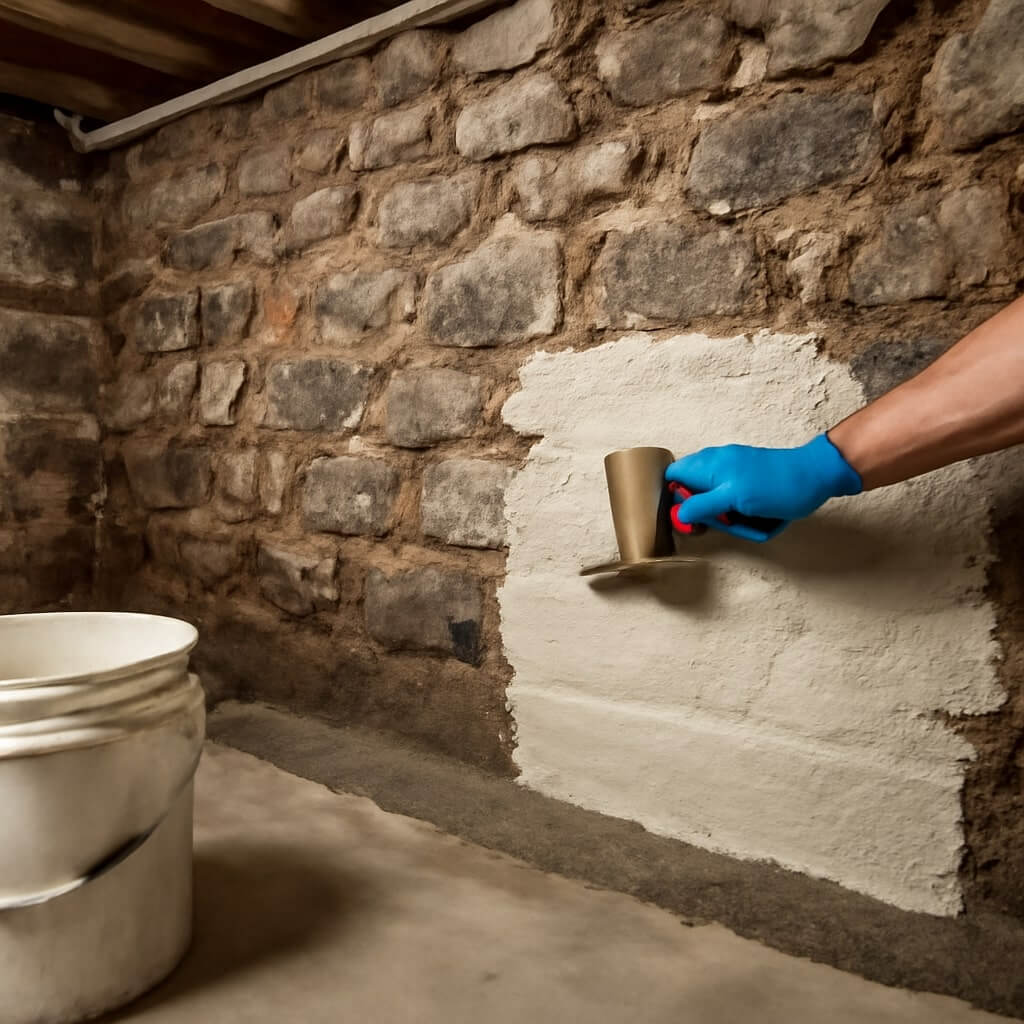
Interior waterproofing focuses on sealing walls and floors to prevent water intrusion, often using membranes or coatings. It’s usually less expensive but mightn’t address severe water issues.
Interior waterproofing seals walls and floors to prevent water intrusion, often at a lower cost, but may not resolve serious issues.
On the other hand, exterior waterproofing involves excavating around your foundation and applying a waterproof barrier, which can be more costly but provides a robust solution.
Assess your specific needs and budget to decide which method will best protect your basement from water damage.
Severity of Water Issues
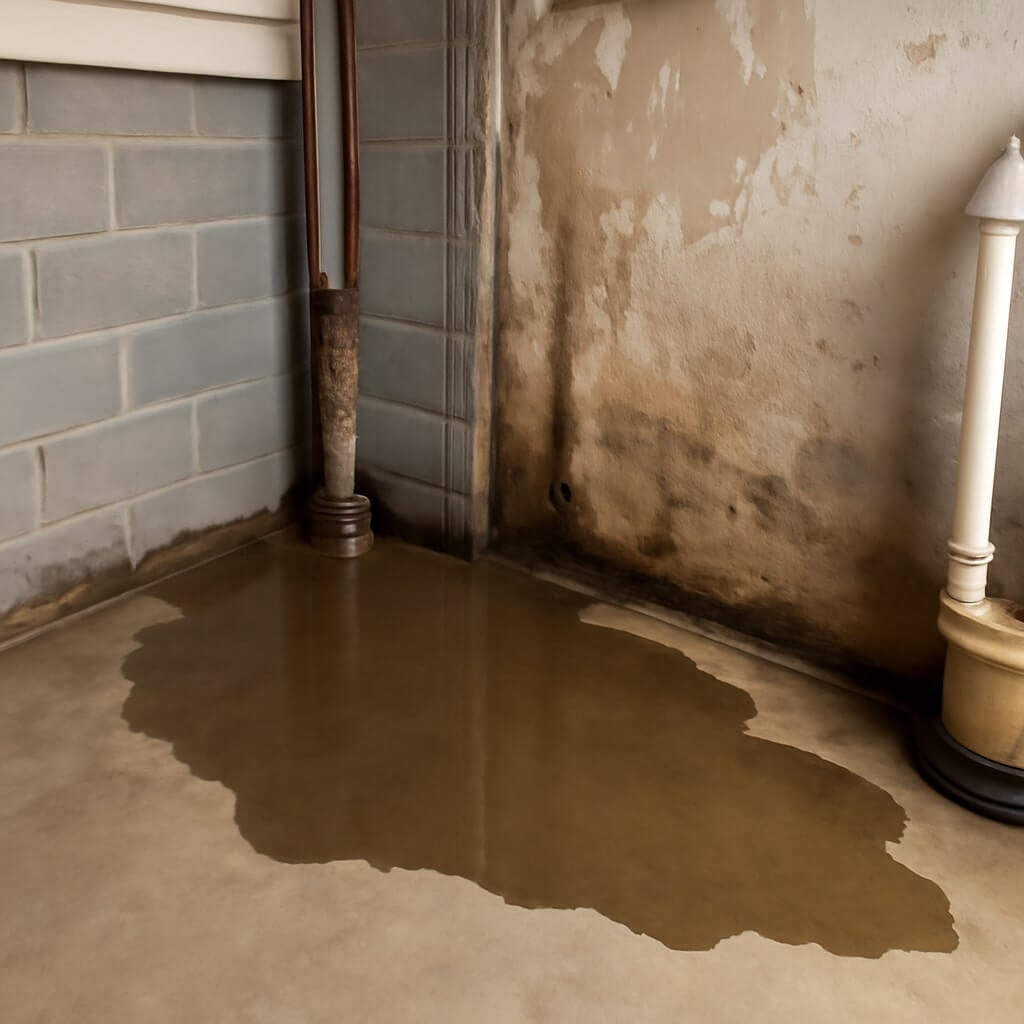
Understanding the severity of water issues in your basement is essential for determining the right waterproofing approach. If you notice signs of water damage, it’s important to act quickly. Different levels of severity require different prevention methods, and addressing them early can save you money in the long run.
| Severity Level | Action Required |
|---|---|
| Minor Leaks | Inspect & Seal Cracks |
| Moderate Issues | Install Drainage System |
| Severe Flooding | Full Waterproofing System |
| Continuous Moisture | Professional Assessment |
Local Labor Costs
While you may be focused on the materials needed for basement waterproofing, local labor costs can greatly impact your overall budget.
The regional wage in your area plays a significant role in determining how much you’ll spend on labor. If you’re in a high-demand labor market, you might find that hiring skilled professionals costs more. Conversely, areas with lower demand could offer more competitive rates.
It’s important to research local contractors and get multiple quotes to guarantee you’re getting a fair price. Balancing labor costs with quality service can help you achieve effective waterproofing without breaking the bank.
Material Quality and Type
After you’ve assessed local labor costs, the next step is to evaluate the quality and type of materials you’ll use for basement waterproofing.
Choosing high-quality materials enhances durability and offers better long-term protection against water damage. Consider options like rubber membranes or cementitious coatings, which vary in effectiveness depending on your specific needs.
Be mindful of the installation techniques as well; improper application can compromise even the best materials.
Investing in durable materials and proven installation methods guarantees your basement remains dry, saving you money on future repairs and maintaining the integrity of your home.
Choose wisely!
Accessibility of the Basement
When it comes to basement waterproofing, the accessibility of your space plays a vital role in the overall cost.
A larger entryway can make it easier for workers to bring in equipment, while tight spots in the structural layout can lead to maneuverability challenges.
Understanding these factors will help you plan effectively and potentially save on expenses.
Entryway Size Impact
The size of your basement entryway greatly influences how easily you can access the space for waterproofing projects.
When considering entryway dimensions, larger openings allow contractors to maneuver equipment and materials more effectively. If your entryway is narrow or low, it may limit access, driving up labor costs and extending project timelines.
Additionally, the choice of entryway materials can impact the ease of installation; sturdy materials might require more effort to work with.
Equipment Maneuverability Issues
Accessing your basement isn’t just about the size of the entryway; it’s also about how easily equipment can be maneuvered inside.
If your basement has tight corners or low ceilings, you might face equipment limitations that hinder the waterproofing process. To tackle this, consider maneuverability solutions like compact tools or equipment designed for small spaces.
Additionally, clearing out unnecessary items can create more room for movement. By ensuring proper access and selecting the right tools, you’ll not only streamline the waterproofing process but also potentially reduce expenses associated with labor and equipment damage.
Structural Layout Challenges
While traversing structural layout challenges in your basement, you’ll quickly realize that accessibility plays an essential role in the waterproofing process.
The foundation design considerably impacts how easily contractors can maneuver equipment. If your basement has tight spaces or low ceilings, it complicates access, potentially increasing labor costs.
Additionally, varying soil conditions around your home can further hinder accessibility, as certain soils may require excavation, making the waterproofing task more demanding.
Permits and Regulations
Before diving into your basement waterproofing project, it’s crucial to check local permits and regulations. Many areas require permits to guarantee compliance with building codes, which can affect your expenses notably.
You’ll need to investigate what’s necessary for your specific project, as failing to obtain the right permits can lead to fines or even the need to redo work.
Additionally, don’t forget about potential permit fees, which can add to your overall budget. By understanding these requirements upfront, you can avoid unexpected costs and make sure your waterproofing project is up to code and protected for the long haul.
Conclusion
In conclusion, understanding the major factors that influence basement waterproofing expenses can help you make informed decisions. By considering your basement’s size, the waterproofing method, and the severity of water issues, along with local labor costs and material quality, you can effectively manage your budget. Don’t forget about accessibility and any necessary permits, as these can also impact your project’s overall cost. With careful planning, you’ll guarantee a dry, protected basement for years to come.